
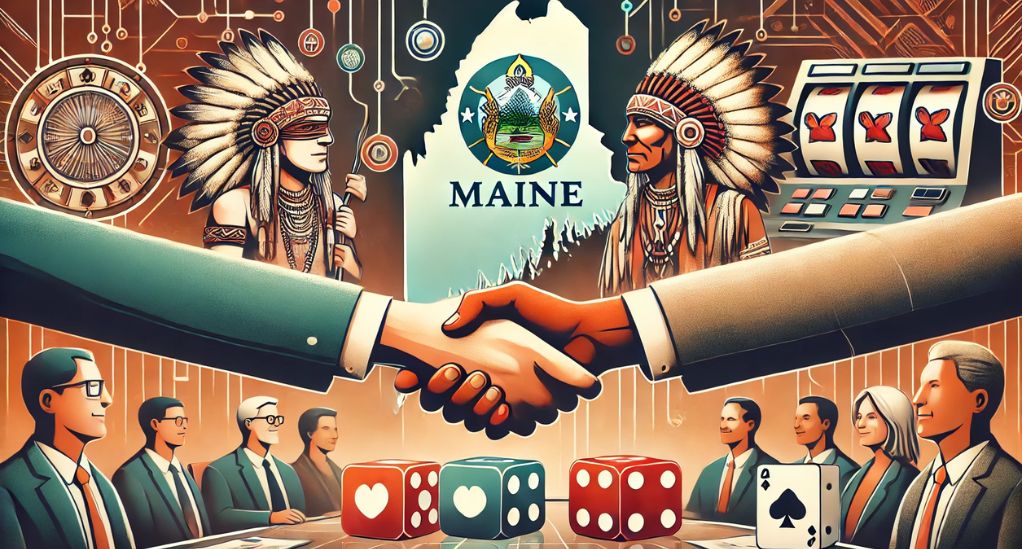
Maine lawmakers are once again considering a proposal that would expand online gambling through tribal operations. Legislative Document 1777 (LD 1777), sponsored by Representative Laura Supica, seeks to give the state’s tribes exclusive rights to operate iGaming platforms. These operations would include online casino games like poker, blackjack, and slots. If passed, this bill would significantly expand Maine’s gambling landscape, which already includes legalized sports betting since 2022.
Focus on Tribal Sovereignty and Economic Opportunities
The bill aims to empower Maine’s federally recognized tribes by granting them control over iGaming activities. Tribal leaders argue that the measure would provide much-needed economic relief to their communities, which have struggled financially for years. In fact, a Harvard Kennedy School study found that Maine’s tribes saw only a 9% rise in per capita income since 1989, while other tribes across the U.S. saw a 61% increase.
This slow economic growth is partly due to the 1980 Maine Indian Land Claims Settlement Act, which limits tribal self-governance. The proposed expansion into iGaming would create a new revenue stream for these tribes, potentially improving their economic situation. According to the Maine Legislature’s official summary, the bill faces a mix of support and opposition, and its progress is being closely watched by many. LD 1777 represents a path toward economic independence for tribes, according to supporters of the bill.
Key Provisions of LD 1777
LD 1777 would allow Maine’s Wabanaki Nations to operate licensed iGaming platforms under the regulation of the Maine Gambling Control Unit (MGCO). Licenses would cost $200,000 and be valid for four years, with an option to renew at the same price. The legislation prohibits tribes from transferring licenses to any outside entities unless they are fully owned by the tribe.
Initially, the bill proposed a 10% tax on iGaming revenue. However, recent amendments increased the tax rate to 16% following debates in the state’s Veterans and Legal Affairs Committee. Revenue generated from iGaming would be allocated to several critical state funds. Forty percent would go to the E-9-1-1 emergency services fund, while 20% would support the Opioid Use Disorder Prevention Fund. The state’s General Fund would receive 1% to cover MGCO’s administrative costs.
Legislative Hurdles and Political Opposition
While LD 1777 has gained significant support from Democratic and Republican lawmakers, it also faces opposition. Governor Janet Mills, a key figure in Maine’s political landscape, has expressed concerns about expanding gambling further. Though she signed the sports betting law in 2022, she remains cautious about iGaming. Reports suggest that Mills may veto the bill if it passes.
The bill has also faced resistance from stakeholders outside the political arena. Steve Silver, a representative from the Maine Gambling Control Board (MGCB), favors a more competitive system. He argues that iGaming licenses should be available to a wider pool of operators, not just the tribes. His concerns reflect a broader debate about the balance between exclusive tribal rights and open-market competition.
Amendments and Delays in Legislative Action
Initially scheduled for a vote in early 2024, LD 1777 faced delays due to bomb threats targeting government buildings, including Maine’s Capitol. The delay allowed lawmakers more time to amend the bill. One major amendment broadened the definition of iGaming to include additional games like poker, blackjack, and roulette.
In early 2024, the Veterans and Legal Affairs Committee passed further amendments to the bill. These changes increased the tax rate and redefined aspects of iGaming regulation. Despite these amendments, LD 1777’s future remains uncertain as lawmakers continue to debate its merits and potential impact.